What is a Power Purchase Agreement and how can it help your business?

Photo of Miles Thomas, CCO
Miles Thomas MRICS
4th March 2026
PPA-Article

Energy costs remain volatile and as the pressure to decarbonise increases, businesses are rethinking how they source and manage electricity. For many, traditional short-term supply contracts no longer offer the certainty, value or strategic advantage they once did. That’s why Power Purchase Agreements (PPAs) are reshaping the way that energy is procured, managed and financed.

A PPA is more than just an energy contract. When used well, it becomes a core part of a proactive energy strategy – one that reduces risk, supports credible net zero plans, and turns energy from a cost into a long-term business asset.

What is a PPA?

A Power Purchase Agreement is a long-term contract under which a business agrees to buy electricity generated by a renewable energy asset at a fixed, pre-agreed price. A PPA typically provides predictable pricing and a direct link between the consumer and the renewable generator.

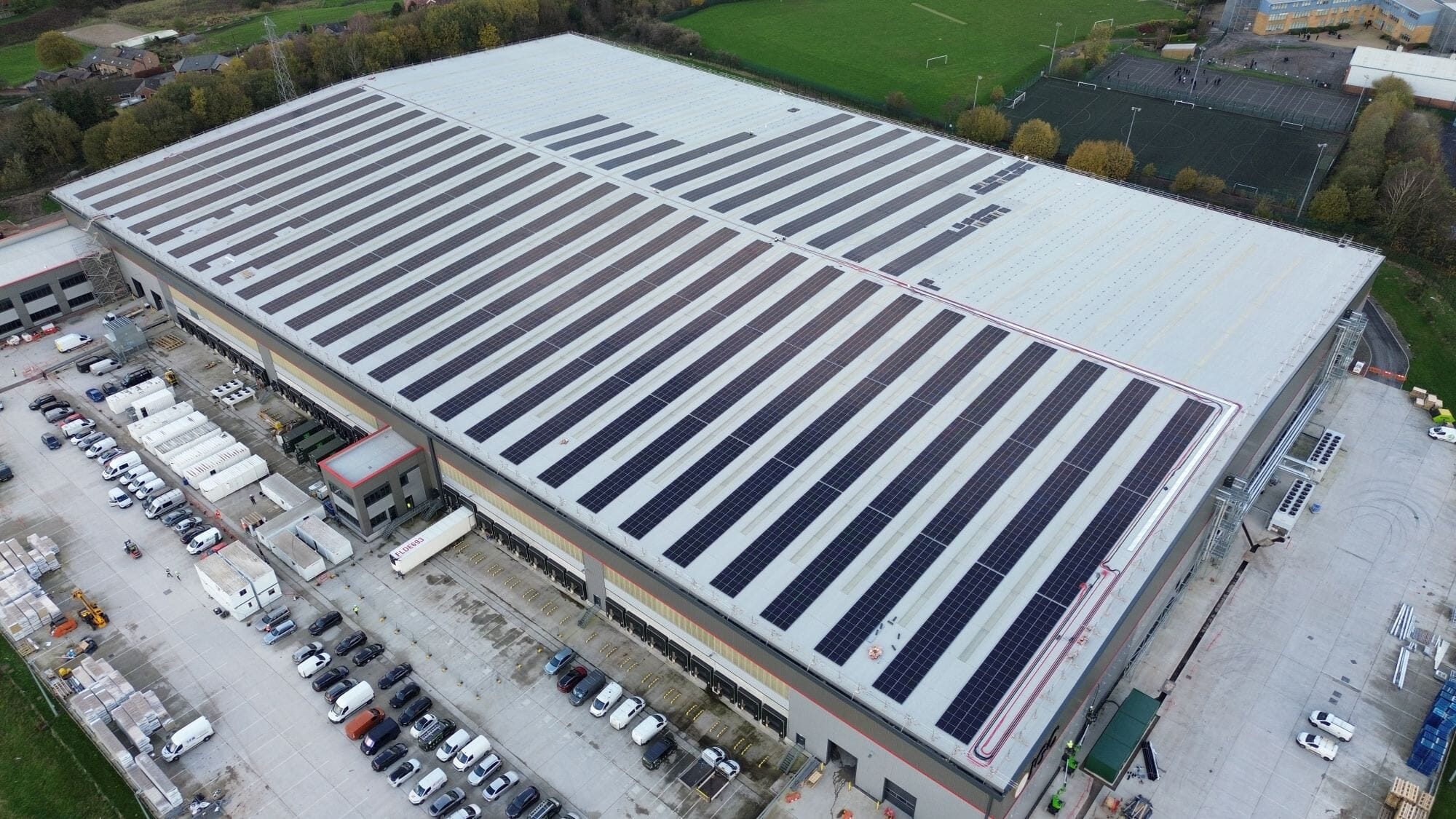
PPAs can take different forms. In an onsite PPA, the renewable asset – typically solar – is installed on or very close to the customer’s site, and supplies clean power directly into their operations. Speed of delivery is another key differentiator. Unlike large corporate PPAs, which can involve complex negotiations, extended structuring processes and dependency on grid connection timelines, on-site PPAs are typically faster to contract and quicker to implement. Projects are smaller, agreements are more straightforward, and critically there is no reliance on securing new grid capacity. AMPYR Distributed Energy is structured to move at pace – with standardised contracts, in-house expertise and committed capital enabling rapid decision-making. This allows customers to move from strategy to operational generation quickly, accelerating both cost savings and carbon reduction without unnecessary delay.

Alternatively, a corporate or ‘sleeved’ PPA enables a business to contract renewable electricity from a dedicated asset located elsewhere, with the power delivered via the grid. This allows organisations to access renewable generation at scale, even where on-site installation is not possible due to space, planning or operational constraints.

Crucially, under either PPA model, the customer does not own the asset. The PPA provider designs, installs, owns and operates the system for its full lifetime, while the customer simply pays a stable, competitive price for the electricity they consume.

This structure removes upfront capital expenditure while delivering long-term price certainty and carbon reduction from day one.

Both onsite and corporate PPAs play an important role in a proactive energy strategy. Onsite PPAs provide energy independence and deliver value to the customer by reducing grid charges, while corporate PPAs provide scale and flexibility for energy-intensive or space-constrained businesses. In both cases, the core benefits remain the same: predictable costs, reduced exposure to volatile markets, and a clear link between energy consumption and renewable generation.

How does a PPA compare to a standard supply contract?

Most businesses are familiar with short-term energy supply contracts, often fixed for one to three years. While these can provide temporary price certainty, they leave organisations exposed to frequent renegotiation, market volatility and limited strategic control.

PPAs work very differently.

Instead of buying electricity solely from the grid, a PPA allows a business to secure renewable power from a dedicated asset – either onsite or off-site – at a known cost for decades. This significantly reduces exposure to wholesale price swings, while improving forecast accuracy for long-term energy spend.

Where a supply contract is reactive, responding to market conditions at renewal points, a PPA is proactive. It locks in value, stability and sustainability upfront, and continues delivering them year after year.

View of a sunrise with commercial solar panels on a rooftop in the foreground and trees in the background
A proactive energy strategy is a business asset

Onsite: more than just renewable energy

Onsite energy solutions are gaining traction because they address several challenges at once. By generating electricity onsite, businesses reduce reliance on the grid and improve energy resilience.

However, not all onsite solutions are equal.

A standard turnkey installation often leaves the customer responsible for long-term performance risk, including maintenance, insurance, cleaning, monitoring, component replacement and warranties. Over time, these hidden responsibilities can erode both financial and operational value.

AMPYR Distributed Energy’s PPA model goes further. By owning the asset for its full 25-year life, ADE takes responsibility for everything required to keep it performing optimally – from installation and commissioning through to maintenance, warranties, monitoring, cleaning, replacement parts and insurance.

Onsite PPAs are more than just an installation service. They provide a long-term operational commitment backed by investment-grade asset management.

For the customer, this delivers genuine peace of mind: no unexpected costs, no operational burden and no performance risk. They simply consume the electricity and pay the same low, predictable price.

Why ownership matters

Ownership is not just a technical detail – it fundamentally changes incentives.

Because AMPYR Distributed Energy’s revenue is directly linked to the electricity the asset generates, it has a clear incentive to maximise performance through careful design, high-quality components, proactive maintenance and continuous monitoring.

This alignment of interests is what makes AMPYR Distributed Energy’s solution more complete than a standard turnkey service, delivering consistently high generation and reliable savings over decades.

Supporting a credible net zero strategy

Many organisations have set net zero targets, but credibility increasingly matters as much as ambition. Stakeholders, investors and customers are looking for tangible action backed by long-term planning, not short-term fixes.

An onsite PPA delivers measurable, additional renewable generation that directly reduces Scope 2 emissions. Because the renewable asset is built specifically to serve the agreement, the electricity is additional and traceable, supporting robust Scope 2 reporting and providing a highly visible demonstration of a business’s commitment to net zero.

A proactive energy strategy is a business asset

Energy strategy is no longer just about cost control. It affects resilience, sustainability, reputation and long-term competitiveness.

A PPA enables businesses to move from reactive energy purchasing to proactive energy management. It transforms energy from an unpredictable overhead into a stable, value-generating asset – supporting financial planning, decarbonisation goals and operational certainty at the same time.

Making it easier with AMPYR Distributed Energy

AMPYR Distributed Energy exists to remove complexity from the energy transition. By combining deep technical expertise with long-term ownership and operational responsibility, ADE makes onsite energy easier to implement and manage. PPAs are not simply an alternative contract structure – they are a structural shift in how energy is sourced and delivered, allowing customers to focus on their core business with confidence.